
Plastering & Rendering · Cornwall · 5.0★ × 22 Google reviews
Plastering & Rendering in Cornwall: Interior Skim, Exterior Render
Interior plastering and exterior rendering across Cornwall. Two-coat skim ready for decoration. Sand-and-cement render, monocouche, silicone render, and lime render on listed and historic Cornish properties. £1M insured, over 20 years' experience in construction.
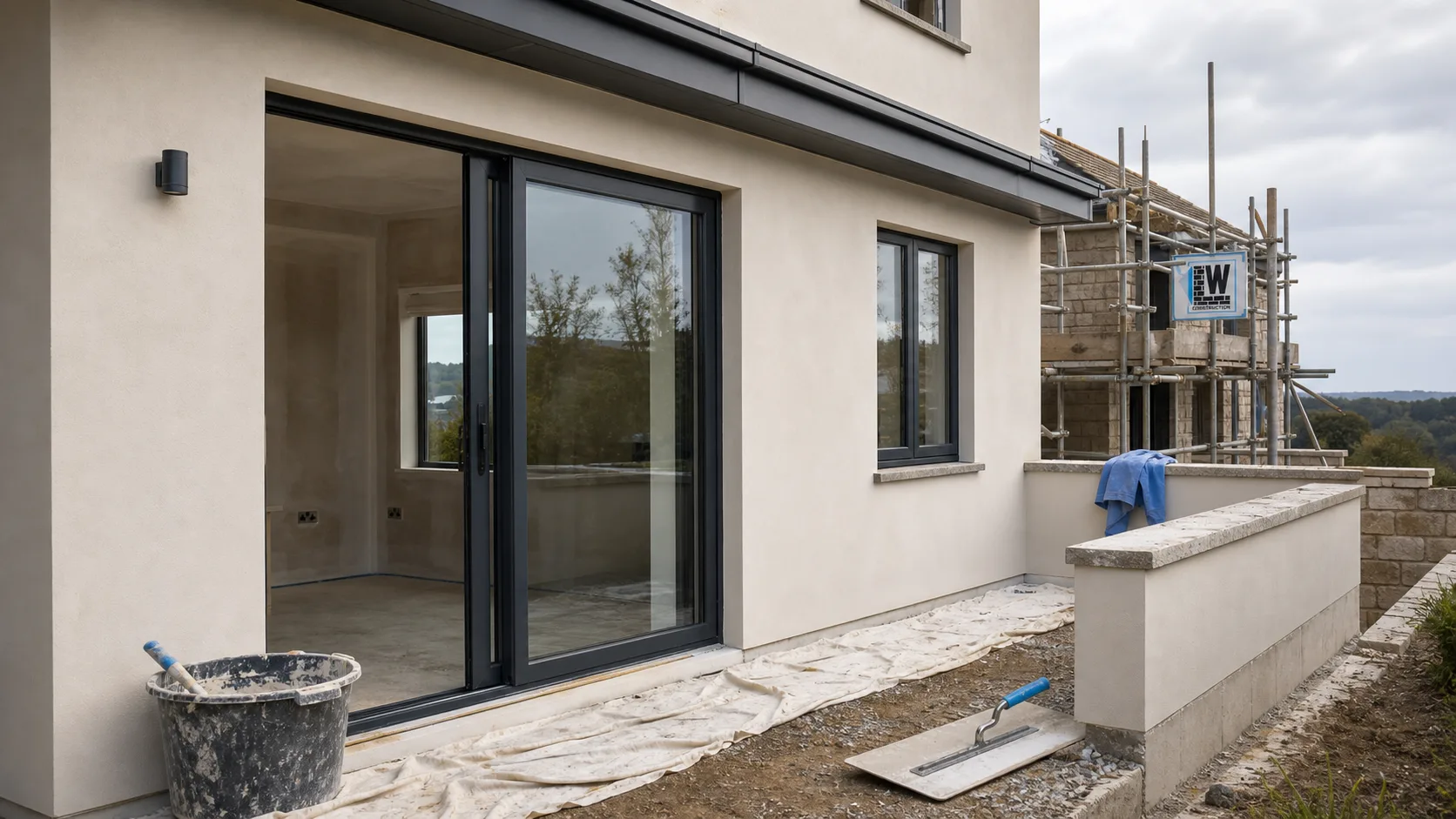
Plastering and Rendering — What They Cover
Plastering is the interior wall and ceiling finish — typically two coats of plaster applied over plasterboard or onto blockwork to give a smooth surface ready for decoration. Rendering is the exterior equivalent — a weatherproof coating applied over masonry to protect and finish the building's outside.
In Cornwall, both have specifics. Coastal salt and frost affect render durability — modern monocouche or silicone renders cope better than traditional sand-and-cement on exposed sites. Older Cornish properties (granite walls, lime construction) need lime-based renders that breathe — modern cement renders trap moisture and damage the wall.

Types of Plastering and Rendering
Interior plastering — two-coat skim
float coat plus finish coat over plasterboard or blockwork. Standard interior wall and ceiling finish.
Interior plastering — backing + finish
sand-and-cement base coat plus skim finish on uneven walls or where extra thickness is needed.
Drylining
plasterboard fixed to dabs or battens, then skim-finished. Common in extensions and conversions.
Exterior rendering — sand-and-cement
traditional render, painted with masonry paint. Cheapest option, 15-25 year lifespan, needs repainting every 5-10 years.
Monocouche render
through-coloured render applied in a single thick coat. No painting required, 25-30 year lifespan, very common on modern Cornwall new builds.
Silicone render
flexible silicone-based render with built-in colour. Highly weather-resistant, 25-30+ year lifespan, premium option.
Lime render
traditional lime-based render for historic and listed Cornish properties. Breathable, allows moisture movement, sympathetic to older walls.
Pebbledash / roughcast
traditional coastal finish where a finish coat is dashed with pebbles or aggregate. Common on older Cornwall properties.
Benefits of Properly Done Plastering and Rendering
Walls that paint clean with no trowel marks.
Cheap plastering leaves wavy walls and visible marks under emulsion — a properly applied skim gives a flat surface that takes paint evenly.
No cracked render in year two.
Bond coat, two-coat application, properly cured — with particular attention to bond and adhesion on Cornwall coastal sites.
Your historic wall isn't damaged by the wrong product.
Lime render breathes; modern cement traps moisture. We won't put cement render on a lime wall — it damages the wall and breaches the listed-building consent.
No frost damage in the first winter.
Render mix matched to Cornwall exposure, so there's no spalling or frost damage when it gets cold.
Sharp corners and reveals.
Beads, angle stops, and reveals all detailed correctly — the corners are exactly where amateur plastering shows.
Our Plastering and Rendering Process
Site visit. We look at the existing surface, check what backing's there, assess the right product for the job.
Quote in 48 hours. Itemised by area and product.
Surface preparation. Existing surface cleaned, loose material removed, PVA-bonded or scratched where needed.
Bonding coat (where required). Plaster bonding agent or render bonding coat applied to non-suction surfaces.
Base coat applied. Float coat or render base coat applied to specified thickness, ruled flat.
Finish coat applied. Skim plaster or render finish coat applied while base coat is still receiving. Trowelled smooth or textured per specification.
Edges and details. Beads, stops, reveals, junctions detailed.
Cure time. Plaster typically dries in 5-7 days before decoration. Render needs longer.
What's Included
- Surface preparation
- Bonding agent or scratching where required
- Plaster or render materials supplied
- Two-coat application
- Edges, beads, reveals
- Site clean-up
- Materials disposal
What Drives the Cost of Plastering and Rendering
Skimming a single room is a low-cost job; skimming or drylining a whole extension or house is a four-figure job; rendering a full house exterior is the larger end, with monocouche and silicone render costing more than traditional sand-and-cement, and lime work on a historic property priced by the metre. Rather than quote a number before we've seen the walls, here's what moves the price:
- Area and scope — a single room versus a whole house, interior skim versus full exterior render.
- Product — sand-and-cement is the cheapest render; monocouche and silicone cost more but need no painting; lime render on historic walls is specialist work.
- Surface condition — sound backing skims quickly; uneven or failed walls need a backing coat or full strip-off first.
- Access and scaffold — exterior render at height needs scaffold, which adds to the cost.
- Listed or historic work — lime work is slower, hand-mixed, and matched to the original — it costs more than modern render for good reason.
Cornwall sits a little above the national average because of material logistics. We give a clear, itemised fixed-price quote after a site visit.
Why Choose L W Construction for Plastering and Rendering
- Render that survives Cornwall, not just the showroom. Over 20 years' experience means we know which renders cope with coastal exposure and which fail at year 5.
- The wall behind the render is qualified-trade quality. NVQ Level 3 + Diploma Level 3 in Bricklaying — the masonry under every render is sound.
- You're protected on every job. £1 million public liability via Zurich Tradesman Insurance.
- You can check us before you commit. 5.0 stars from 22 Google reviews.
- Your historic wall is treated properly. Lime mortar and lime render, sympathetic to historic Cornish walls — we won't put cement on a lime wall.

About the Builder
Luke Walker. NVQ + Diploma Level 3 Bricklayer.
"Render fails when the mix is wrong for the wall or the exposure. The right product on the right wall lasts 30 years. The wrong product, even applied well, fails in 5."
— Luke Walker, Founder, L W Construction
Areas We Cover for Plastering & Rendering
We plaster and render across west and central Cornwall, working from our base in Heamoor, Penzance. We cover:
- Penzance — our home patch, including Heamoor, Newlyn, and the surrounding villages.
- Truro — interior skim and exterior render across the city, including historic-property lime work.
- Newquay — coastal-spec render on the north coast.
- Helston — the Lizard and Helston area.
- Falmouth — including Penryn.
- St Ives — render on exposed coastal and conservation-area properties.
- Camborne — Camborne, Pool, and Redruth corridor.
- Hayle — estuary-side properties and new-build render.
Wherever the walls are across Cornwall, call Luke on 07749 468160 for a free site visit.
Recent Plastering Work in Cornwall
We're adding more recent plastering and rendering projects to our portfolio as they complete — interior skim, exterior render, and lime work from across Cornwall.
See our Cornwall project portfolio → for completed work across plastering, extensions, and new builds.
What Cornwall Homeowners Say
Related Services
- House Extensions — render and plaster as part of extension finishing.
- New Builds — interior and exterior finishing on every new build.
- Bricklaying and Blockwork — the masonry under every render.
- Loft Conversions — plastering the new internal space.
Need Cornwall plastering or rendering?
Free site visit, written quote in 48 hours.
Last updated: Thursday 24th September 2026
Frequently Asked Questions
What's the difference between plastering and rendering?
Plastering is the interior wall and ceiling finish — typically a gypsum-based plaster applied over plasterboard or backing. Rendering is the exterior equivalent — a weatherproof coating (sand-cement, monocouche, silicone, or lime) applied over masonry. Different products, different application techniques, different durability requirements.
How long does plaster take to dry before I can decorate?
Plaster typically takes 5-7 days to dry fully before painting, depending on temperature, humidity, and ventilation. You'll see the surface change from pink/grey wet to a uniform pale colour when fully dry. Painting before it's dry causes adhesion problems — wait until it's dry through.
What's the best render for a Cornwall coastal property?
Monocouche or silicone render copes better with Cornwall coastal salt and frost than traditional sand-and-cement. Both are through-coloured (no painting needed), more flexible (resist cracking better), and have 25-30 year lifespans. For listed or historic walls, lime render is the only correct option — modern renders damage older walls.
Can you re-render an existing property?
Yes. We strip the old render, prepare the masonry surface, apply a bond coat or scratch coat where needed, then apply the new render system. Existing cement render that's blown or cracked typically needs full removal — patching rarely lasts.
How much does plastering or rendering cost?
Skimming a single room is a low-cost job; skimming or drylining a whole house is a four-figure job; rendering a full house exterior is the larger end, with monocouche and silicone costing more than sand-and-cement and lime work priced by the metre. We won't put a firm number on it before we've seen the walls — the price moves with area and scope, the product, surface condition, access, and whether it's listed or historic work. We give a clear, itemised fixed-price quote after a site visit.
Will the work be messy and disruptive?
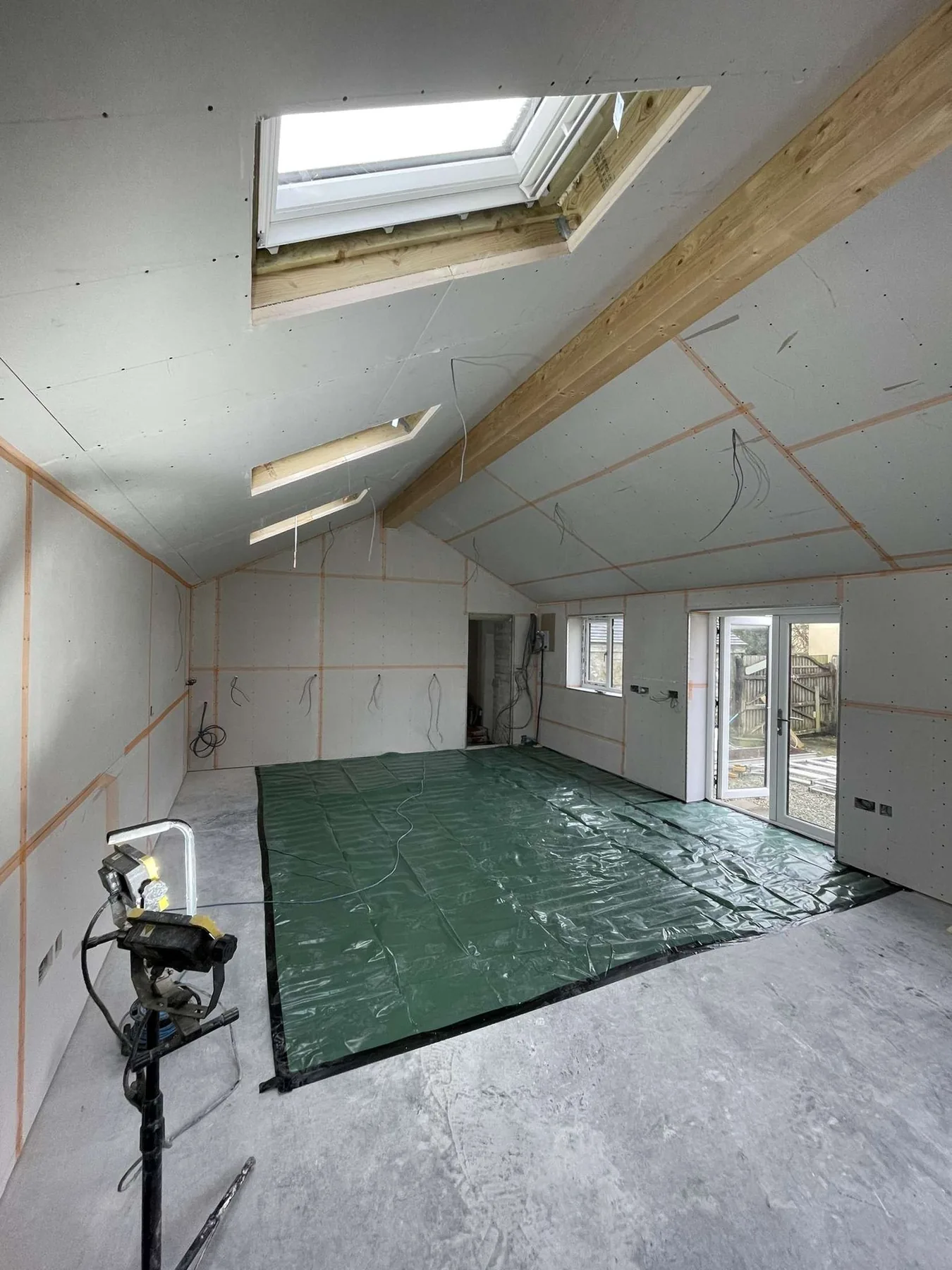
Plastering is a dusty trade, so we sheet and mask up to protect floors and furniture, and clean down at the end of each day. Interior plastering means a room is out of use while it's worked on and then dries. Exterior rendering is mostly outside the house. We keep things organised and respectful of your home throughout.
What deposit or payment schedule do you work on?
For a plastering or rendering job we normally take a deposit to cover materials at the start, then the balance on completion once you've checked the finished work. On larger render jobs with scaffold, payments can be staged against progress. No large cash sum up front.