
Bricklaying & Blockwork · NVQ + Diploma Level 3 · Cornwall
Bricklayer in Cornwall, NVQ + Diploma Level 3 Qualified
Luke Walker is one of a small number of Cornwall builders running their own company with both NVQ Level 3 and Diploma Level 3 in Bricklaying — the two recognised trade qualifications for structural brickwork. We handle structural bricklaying, blockwork, retaining walls, garden walls, brick repair, and re-pointing across Cornwall, with the same £1M public liability cover and 5.0★ Google reviews you'd expect from any L W Construction job. Free quote, no obligation.
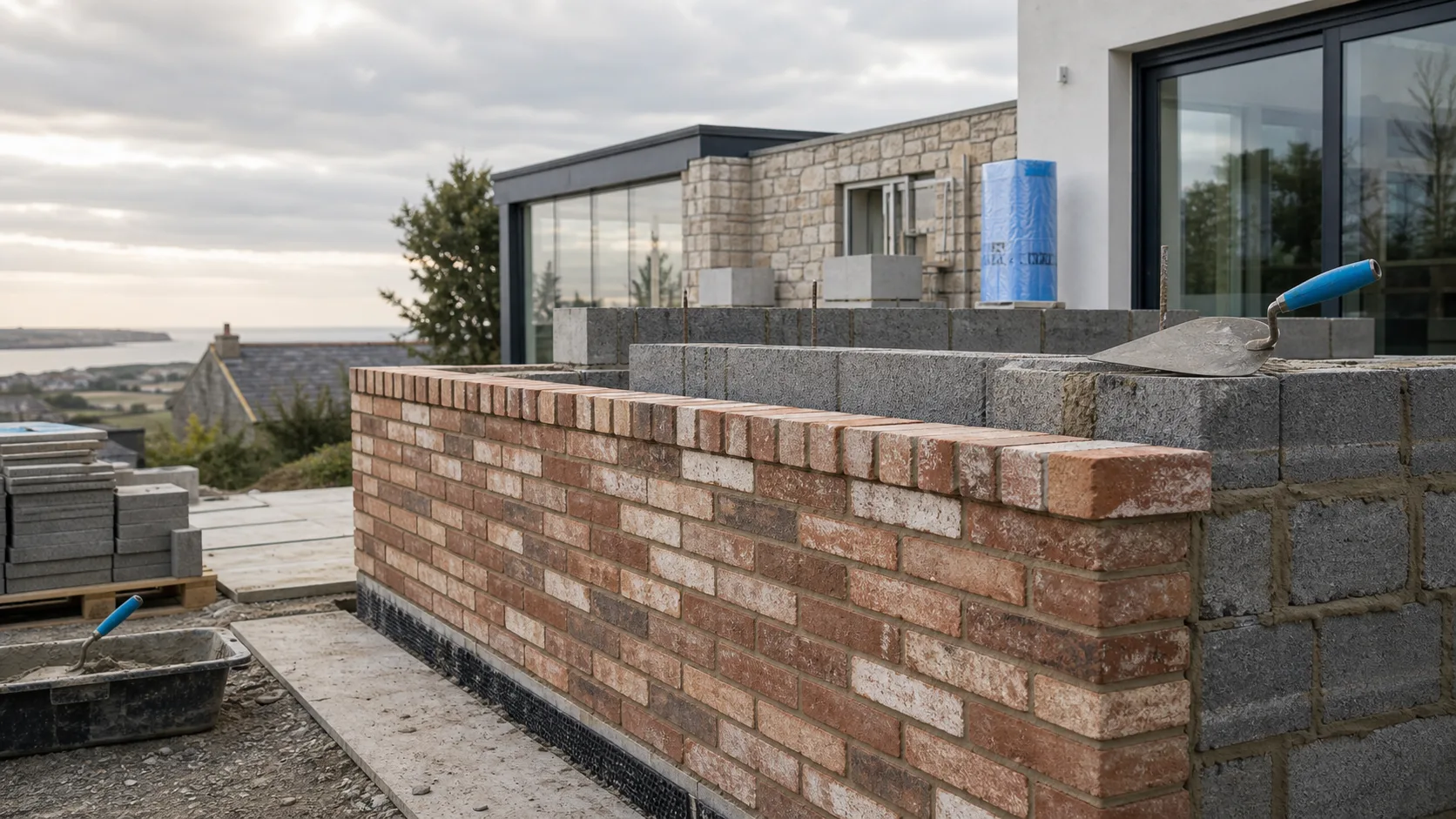
What Bricklaying and Blockwork Cover
Bricklaying is the construction of structural and decorative walls using bricks bedded in mortar. Blockwork uses larger concrete blocks for inner skins, structural walls, and load-bearing applications. Together they form the structural shell of nearly every Cornwall house — cavity walls in new builds, openings in extensions, retaining walls on sloping plots, garden walls, and the structural blockwork that sits behind every render or facing brick.
In Cornwall, bricklaying gets tested by salt air, frost, and the sloping plots that dominate from the Lizard up to Bodmin Moor. Mortar mix, brick selection, and cavity construction all matter more here than they do inland. Getting it right means a wall that holds up for 100 years; getting it wrong means efflorescence, frost spalling, or settlement cracks visible in the first winter.
Heritage & Bespoke Brickwork
The high end of the bricklaying trade in Cornwall is the heritage and bespoke work — listed buildings, conservation-area properties, and the kind of detail you can't quote off a price-per-metre rate. The kind of work we take on:
Listed-building repointing.
Most listed Cornish property fails in the same place: cement pointing applied at some point in the 20th century is now trapping moisture in soft historic brick or stone, causing frost damage and face loss. The fix is raking out the cement pointing without damaging the brick face, then re-pointing in a breathable lime mortar matched to the original. We use natural hydraulic lime with sharp Cornish sand, hand-mixed to colour-match a sample panel the conservation officer signs off. Raking is by hand — never an angle-grinder — to protect the brick edge. Slow work, but the only work that holds.
Cornish granite and slate walling.
Traditional Cornish wall construction — random rubble, coursed rubble, or properly coursed stone — using hand-selected granite or slate. Stone selection matters: weather-faced stones go to the outside, well-bedded stones laid horizontal, traditional dry-stone-and-lime techniques where the wall is fully exposed. We've built granite walls across the Penwith and Lizard peninsulas and slate walls on properties closer to Tintagel and Delabole. In a conservation area we'll source stone from the right quarry — Cornish stone has a provenance the conservation officers can spot.
Bespoke garden walling.
High-end Cornwall garden work where the wall is meant to be looked at, not just a boundary. Curved walls running along a driveway, matched stone or limestone capping, cable routes built in for garden lighting, niches for sculpture, planted walls with irrigation built in. We work to the landscape architect's drawings, attend the site meetings, and sort the construction sequence with their suppliers. Suits larger gardens and rural plots where the landscaping is a serious project in its own right.
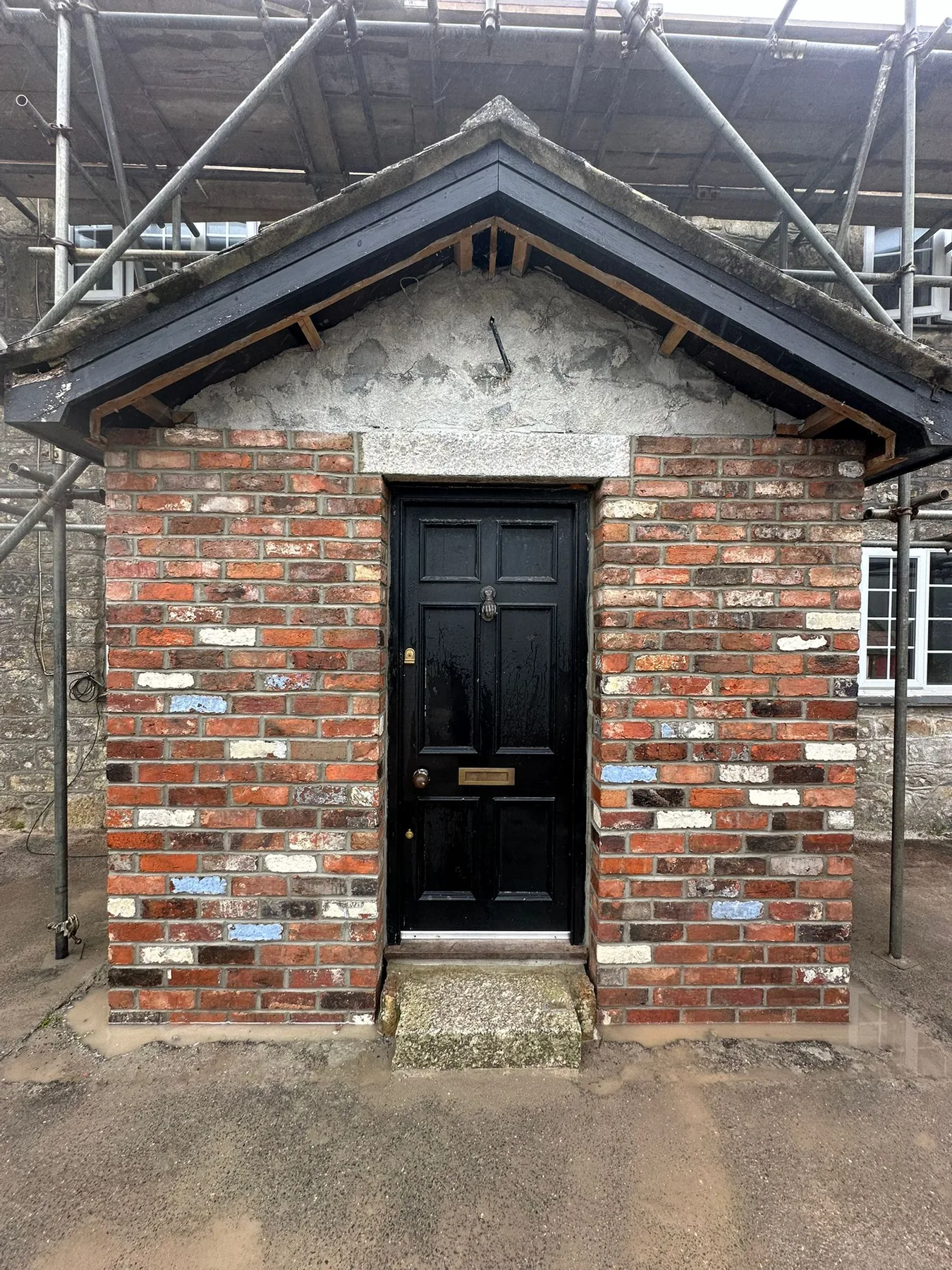
Decorative brickwork, Nancledra — finished side angle
Heritage chimney rebuilds.
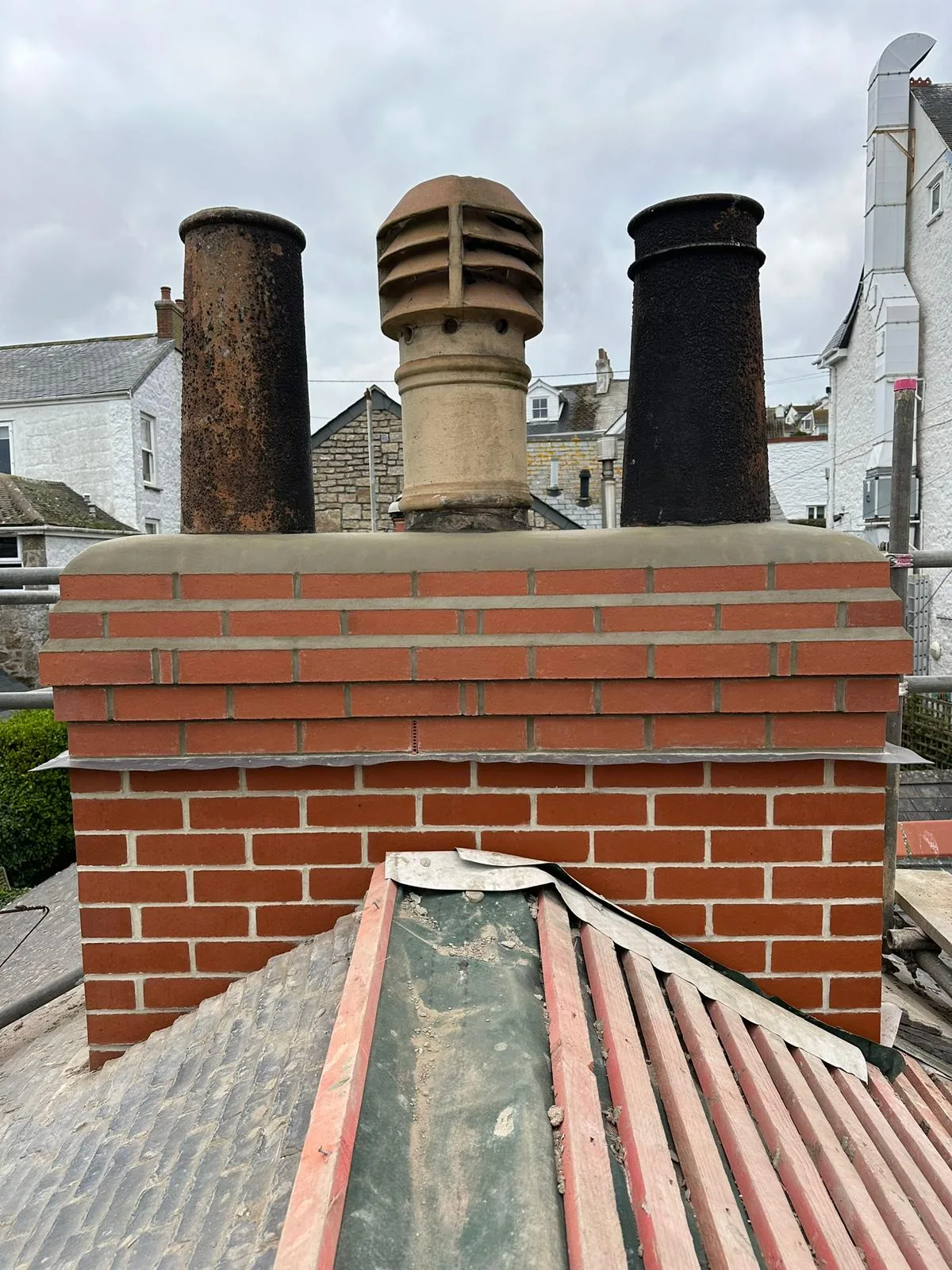
Period Cornwall properties — Victorian terraces, granite farmhouses, slate-stack cottages — often need a full chimney rebuild when the stack has failed at the corbel course or below. We take the chimney down brick-by-brick, salvage original bricks or stones where they're still sound, and rebuild to the original course pattern with lime mortar and a matched cap. Residential only — our insurance covers private dwelling chimneys but not industrial chimney shafts. A Cornish farmhouse chimney rebuild is in scope; a tall factory stack is not.
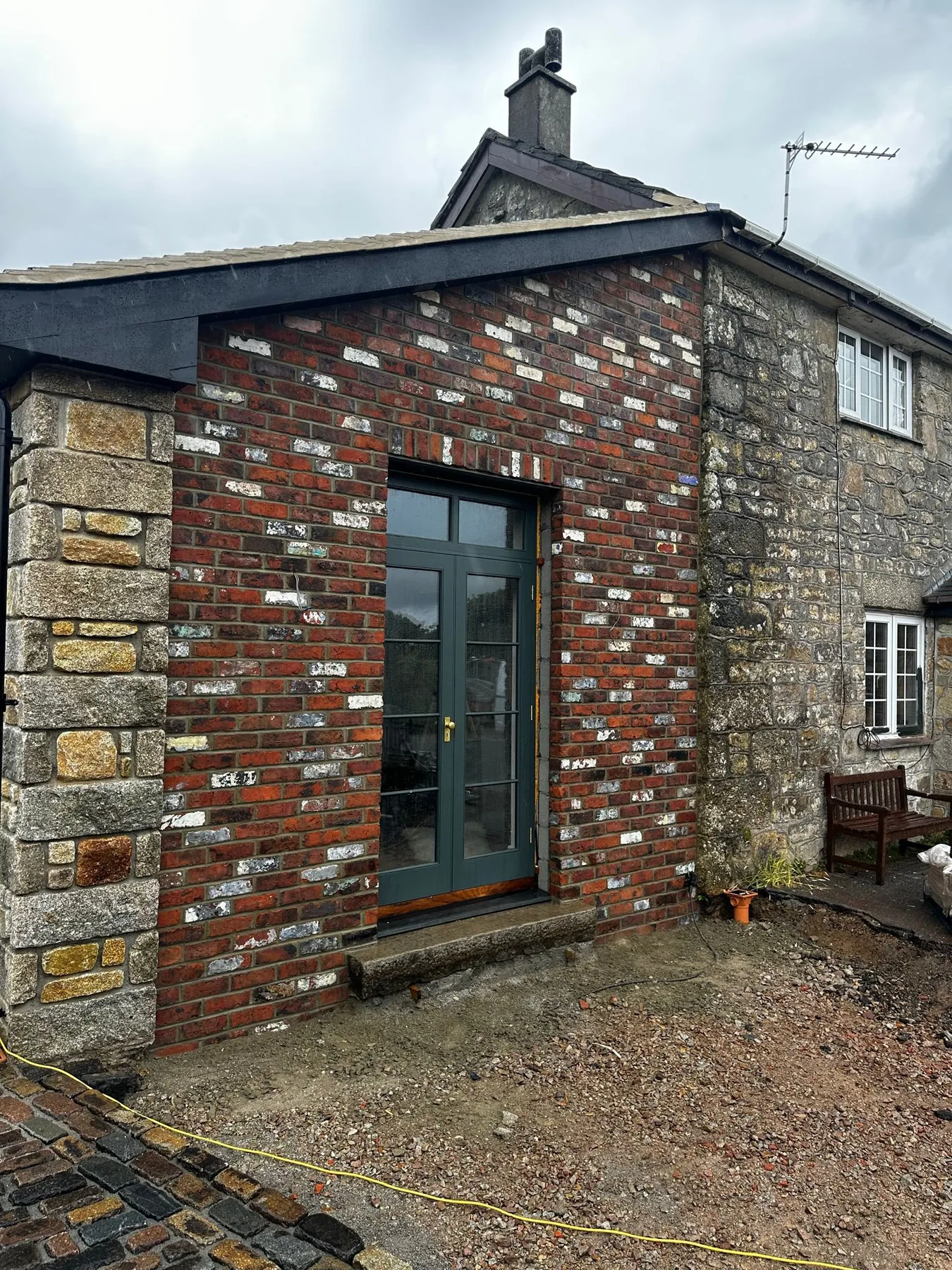
Decorative brickwork, Nancledra — close-up showing bond and joint detail
Conservation-area rebuilds.
Whole sections of wall that need rebuilding inside a Cornwall conservation area — usually where a wall has bowed, settled, or come down in a storm. The job is reading the original construction (brick course, mortar mix, pointing profile, bond) and rebuilding to match exactly. Common in central Truro, Falmouth, St Ives, and the Penzance Old Town conservation area. Cornwall's conservation officers are detailed and have long memories — we work with them early and provide sample panels for sign-off before the main wall goes up.
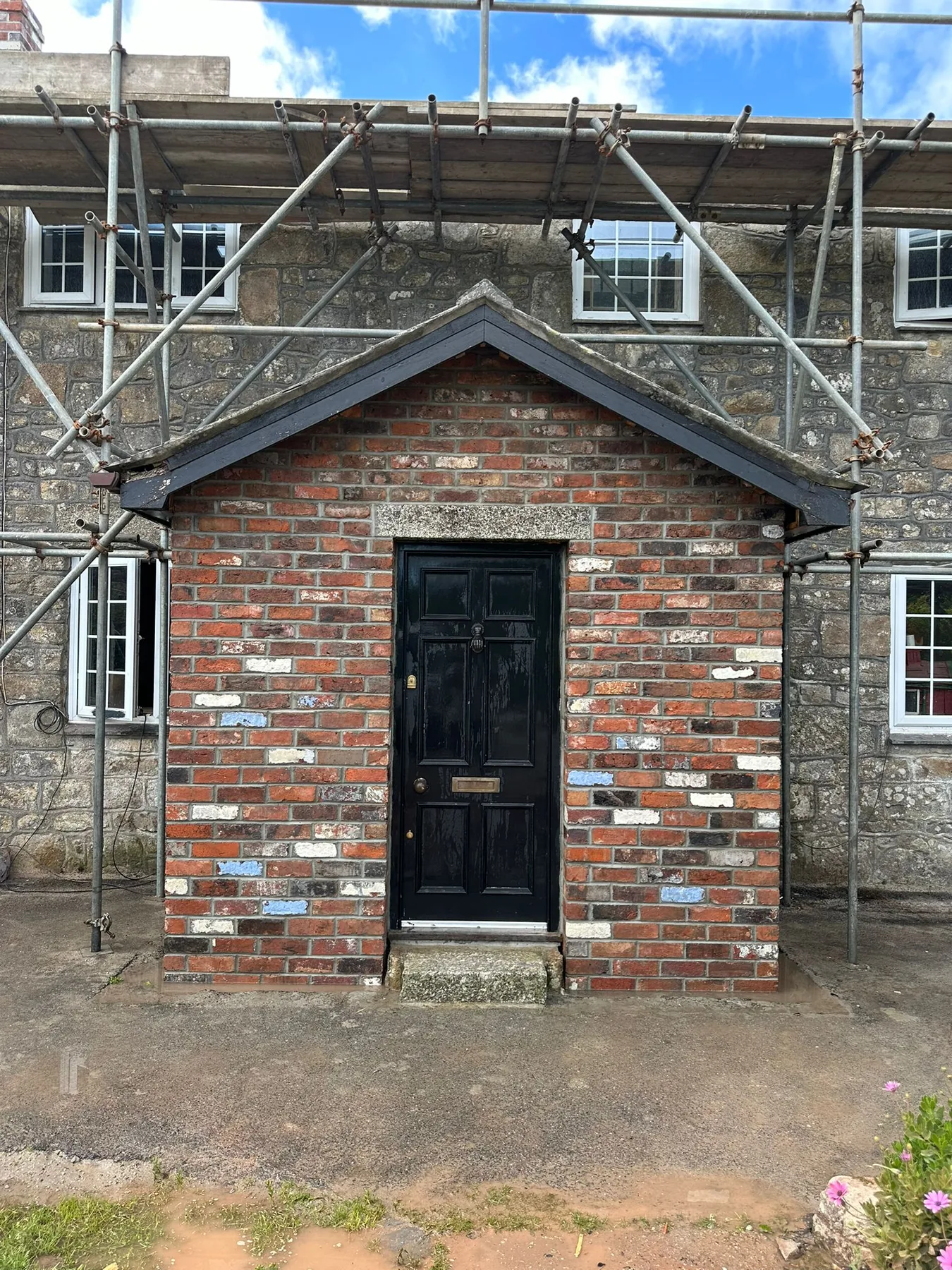
Decorative brickwork during build — scaffold and front-side detail
Types of Bricklaying and Blockwork We Do
Structural cavity bricklaying
outer brick skin + inner blockwork, the standard construction of new builds and extensions. Insulation in the cavity, wall ties at correct spacing, lintels over openings.
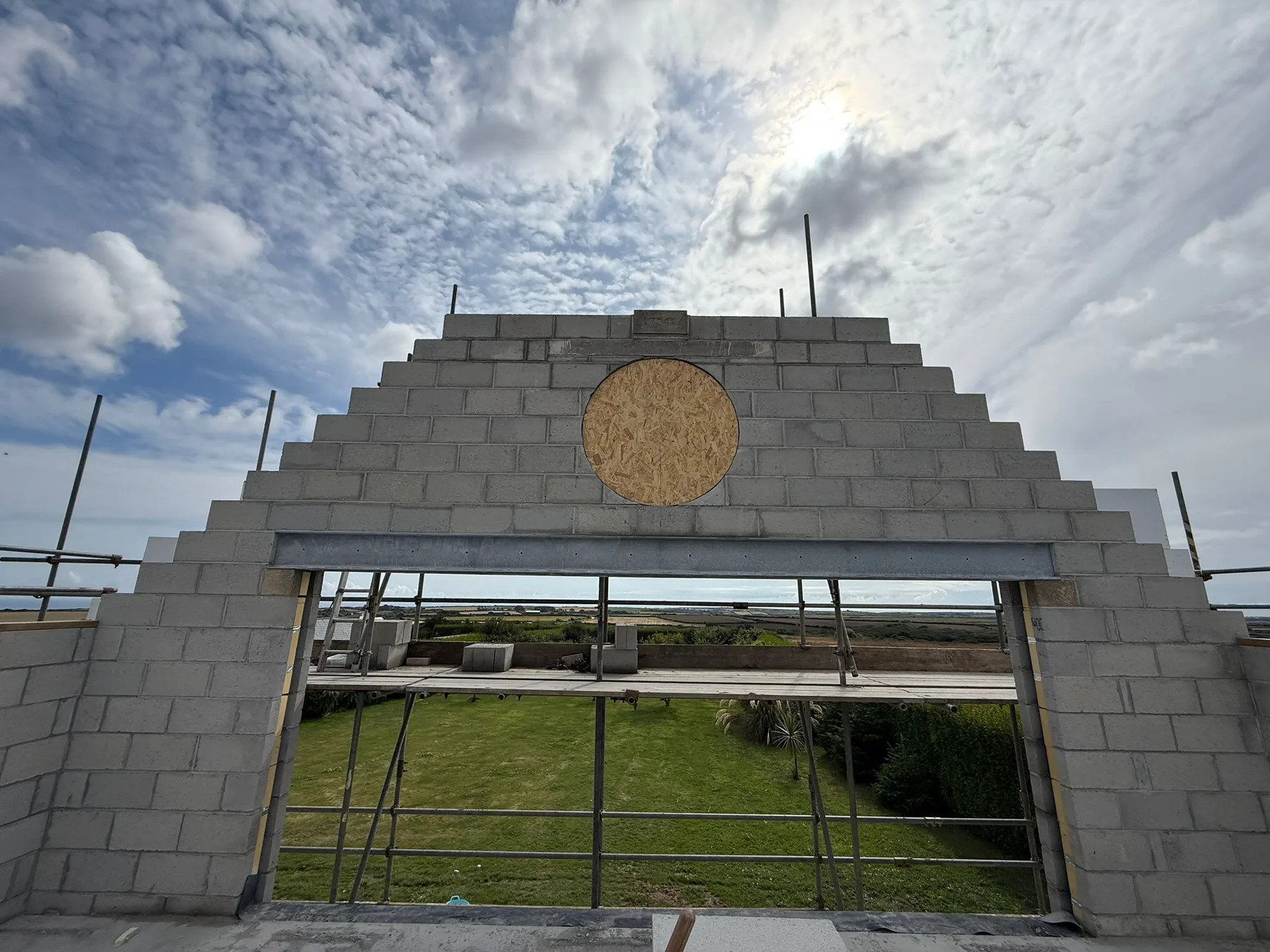
Cavity bricklaying — new-build shell in progress
Retaining walls
for sloping Cornwall gardens, level changes, road frontages. Sized to retain the soil load with proper drainage behind. Concrete block or natural Cornish stone facing.
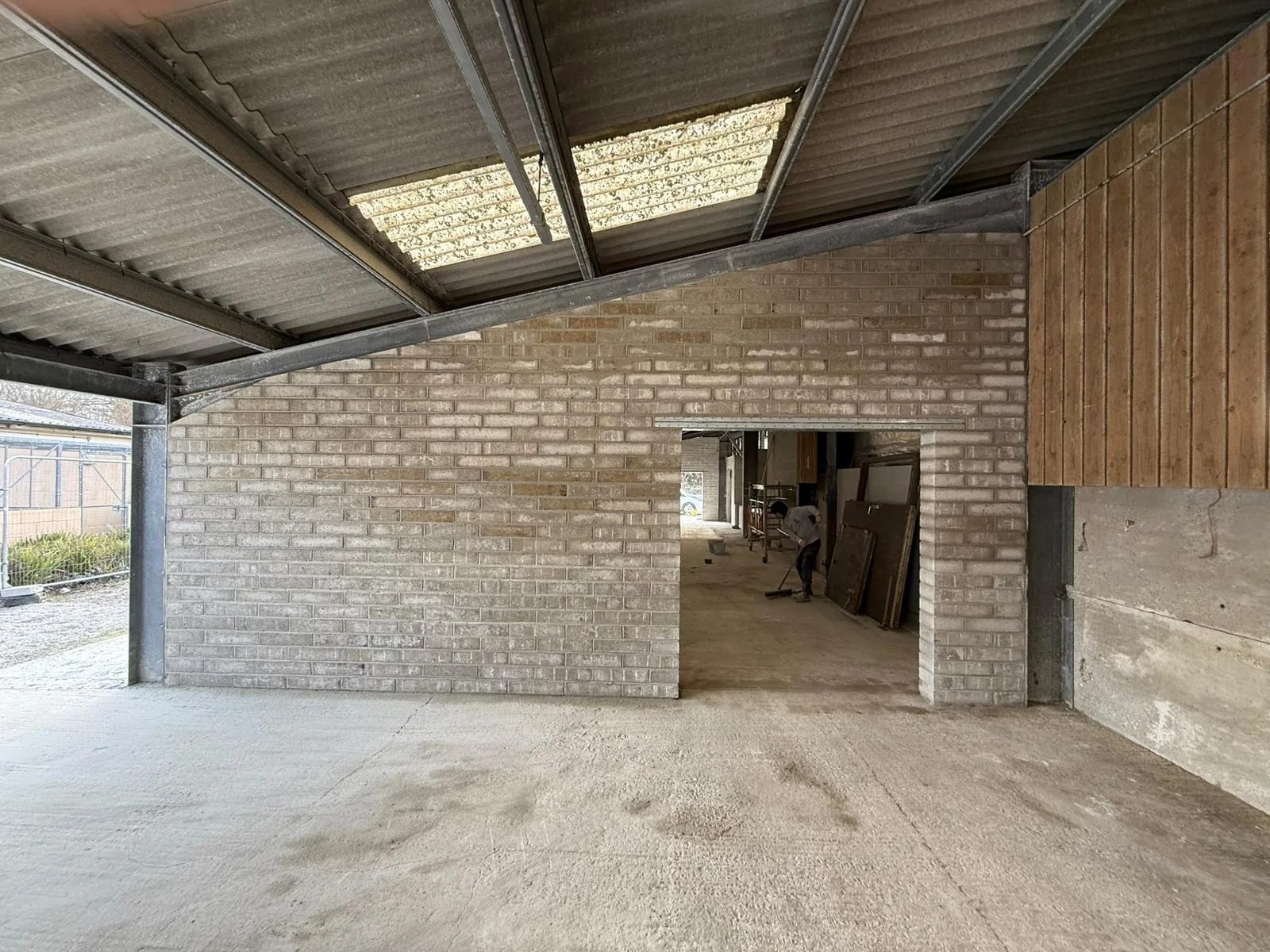
Commercial blockwork — internal wall, alternate angle
Garden walls + boundary walls
decorative or functional, 1-2.4m heights. Cornish-stone-faced, brick-faced, or rendered blockwork.
Brick repair + re-pointing
historic Cornwall properties where mortar has perished, frost-damaged brickwork, or settlement repair. Lime-mortar pointing on older listed buildings.
Structural alterations
opening up walls with RSJ steel beams, infilling old openings, raising chimney breasts.
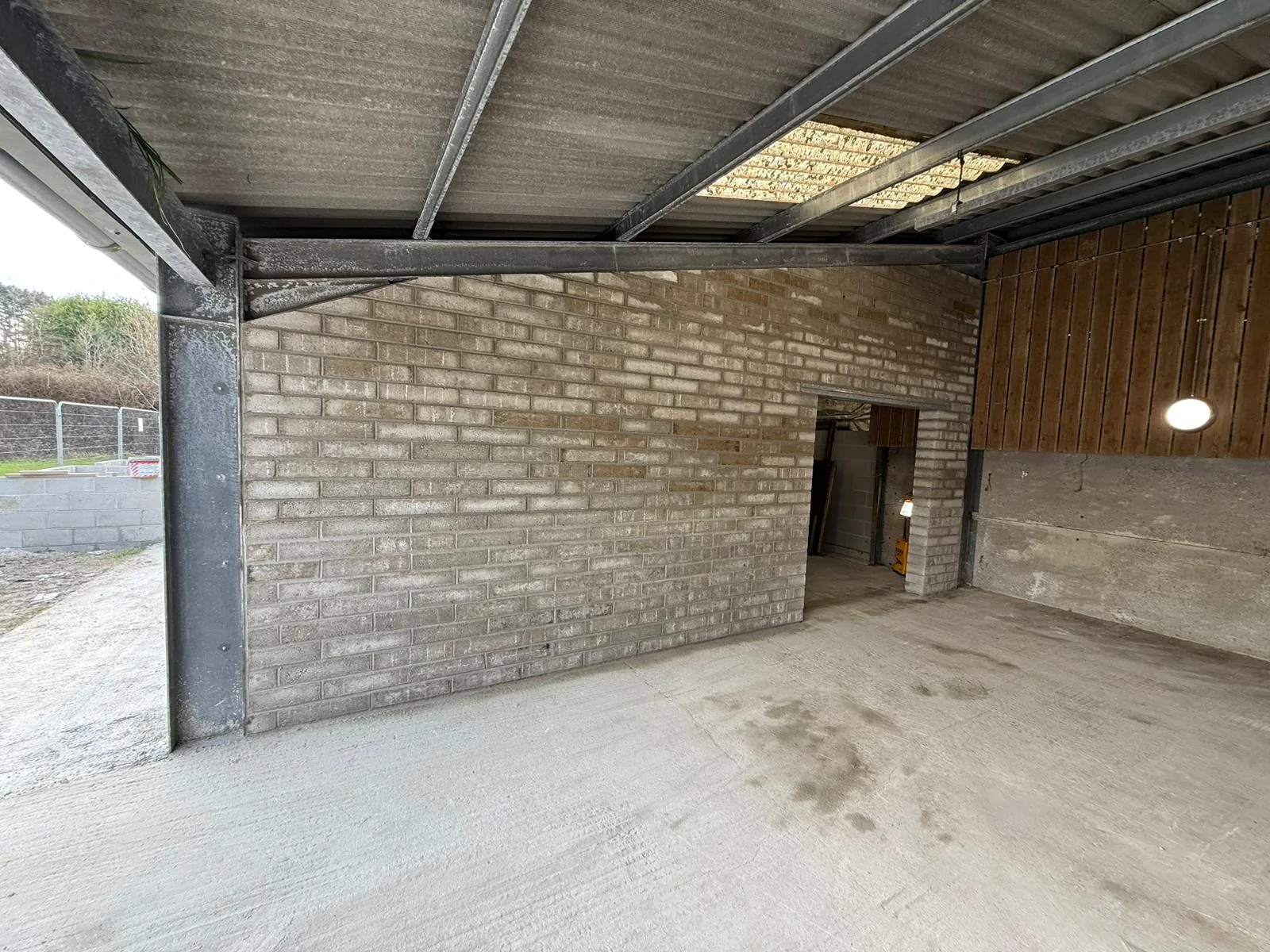
Commercial blockwork — internal wall, further angle
Stone-faced walls
Cornish granite or imported stone facing on retaining walls and feature walls.
Benefits of Hiring a Qualified Bricklayer
You get work you can prove passed inspection.
NVQ Level 3 and Diploma Level 3 in Bricklaying are nationally recognised, verifiable qualifications — and the work passes Building Control on first inspection, every time.
Your wall lasts because the mortar suits the wall.
Cornwall coastal exposure needs a different cement-to-lime-to-sand mix than inland, and listed or historic walls need lime mortar — never modern cement. A qualified bricklayer specifies the right mix before laying a single brick.
No settlement cracks in the first winter.
Cavity wall construction needs specific wall-tie spacings and lintel bearings to the engineer's spec. Done right, the wall stays straight and lasts indefinitely.
Your retaining wall doesn't bow or topple.
A retaining wall without weep holes and a drainage layer is a future failure. We build the drainage in from the start so hydrostatic pressure doesn't bow or topple the wall down the line.
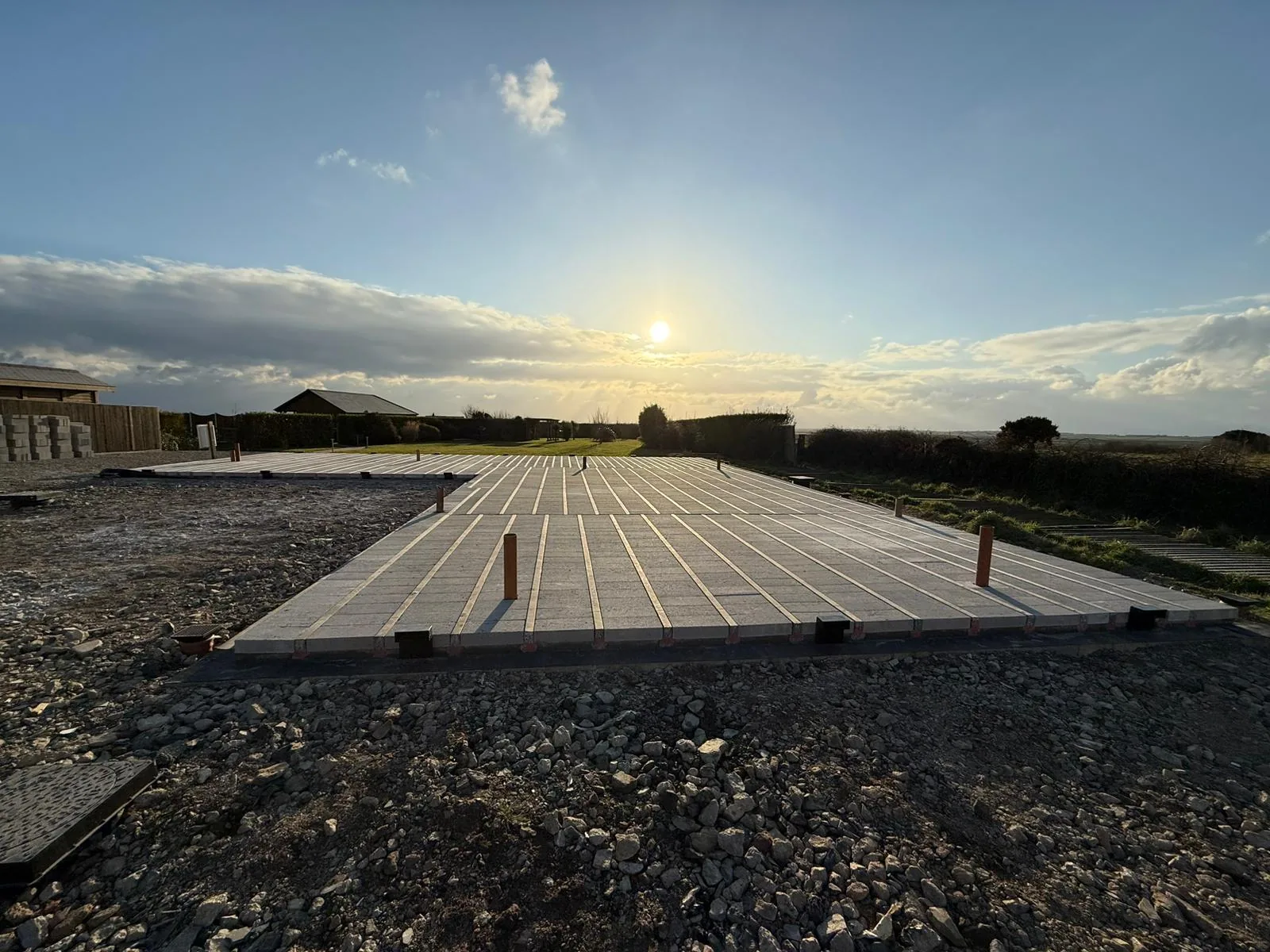
Coastal retaining wall with drainage in progress
It actually looks right.
Bond pattern, joint width, joint profile, brick-face appearance — the details that separate a craftsman's wall from a chancer's.
Our Bricklaying Process
Site visit + design check.
We look at the application — structural wall, retaining wall, garden wall — and either work to your architect/engineer's specification, or recommend a structural engineer if you don't have one.
Foundation check via groundworks.
Every brick wall needs a sound foundation. We dig or verify foundations to suit the wall's load.
Material selection.
We specify brick (clay/concrete, type, frost rating), mortar mix, wall ties, lintels, dampproof course, and (for retaining walls) drainage layer.
Lay the wall.
To the bond pattern specified (stretcher bond standard for cavity walls, English/Flemish bond for feature walls). Joints raked, struck, or recessed per specification.
Pointing + finish.
Mortar pointing to the agreed profile. Cleaning of brickwork on completion.
Sign-off.
Cornwall Council Building Control sign-off where required (structural walls, retaining walls over specified heights).
What's Included in a Bricklaying Quote
- Material specification (brick, block, mortar, ties, lintels, DPC)
- Foundation check or new foundation if needed
- Scaffolding (where the wall height requires)
- Laying to specified bond pattern
- Insulation install in cavity walls
- Lintel + opening formation
- Mortar pointing to agreed profile
- Cleaning of finished brickwork
- Site clean-up
- Building Control liaison where structural
What Drives the Cost of Bricklaying Work
Bricklaying costs vary a lot by application — a standard garden wall is a low-four-figure job; a stone-faced feature wall or a drained retaining wall costs more; a full cavity wall is priced as part of the wider build. Rather than put numbers on a website that won't mean much before we've seen the job, here's what actually moves the price:
- Materials and finish — clay or concrete brick, block, or hand-selected Cornish stone facing. Stone is the most expensive; rendered block the least.
- Foundation work — every wall needs a sound foundation. A new foundation adds to the cost; an existing sound one doesn't.
- Access and scaffold — a wall you can reach off the ground is cheaper than one needing scaffold and edge protection.
- Coursing and detail — a simple stretcher-bond wall is quicker than a coursed stone wall or a feature bond pattern.
- Drainage — retaining walls need weep holes and a drainage layer, which adds to the build.
Cornwall runs a little above the national average on labour and materials because of transport. We're straight about that, and we give a fixed-price quote after a site visit.
Why Choose L W Construction for Bricklaying
The bricks are laid by qualified hands. NVQ Level 3 + Diploma Level 3 in Bricklaying — both nationally recognised, and the qualifications behind the actual hands on the trowel.
A builder who knows Cornwall walls. Over 20 years' experience with coastal exposure, granite ground conditions, and historic-property constraints. Local knowledge counts.
You're protected on every job. £1 million public liability via Zurich Tradesman Insurance.
You can check us before you commit. 5.0 stars from 22 Google reviews.
The structural work is Luke's, not a sub-contractor's. According to the City & Guilds 2024 trade survey, fewer than 1 in 6 UK builders running their own businesses hold Level 3+ qualifications in their core trade — most subcontract the structural work out. Luke does it himself.

About the Bricklayer
Luke Walker, NVQ Level 3 + Diploma Level 3 in Bricklaying. Over 20 years' experience in construction. Heamoor, Penzance.
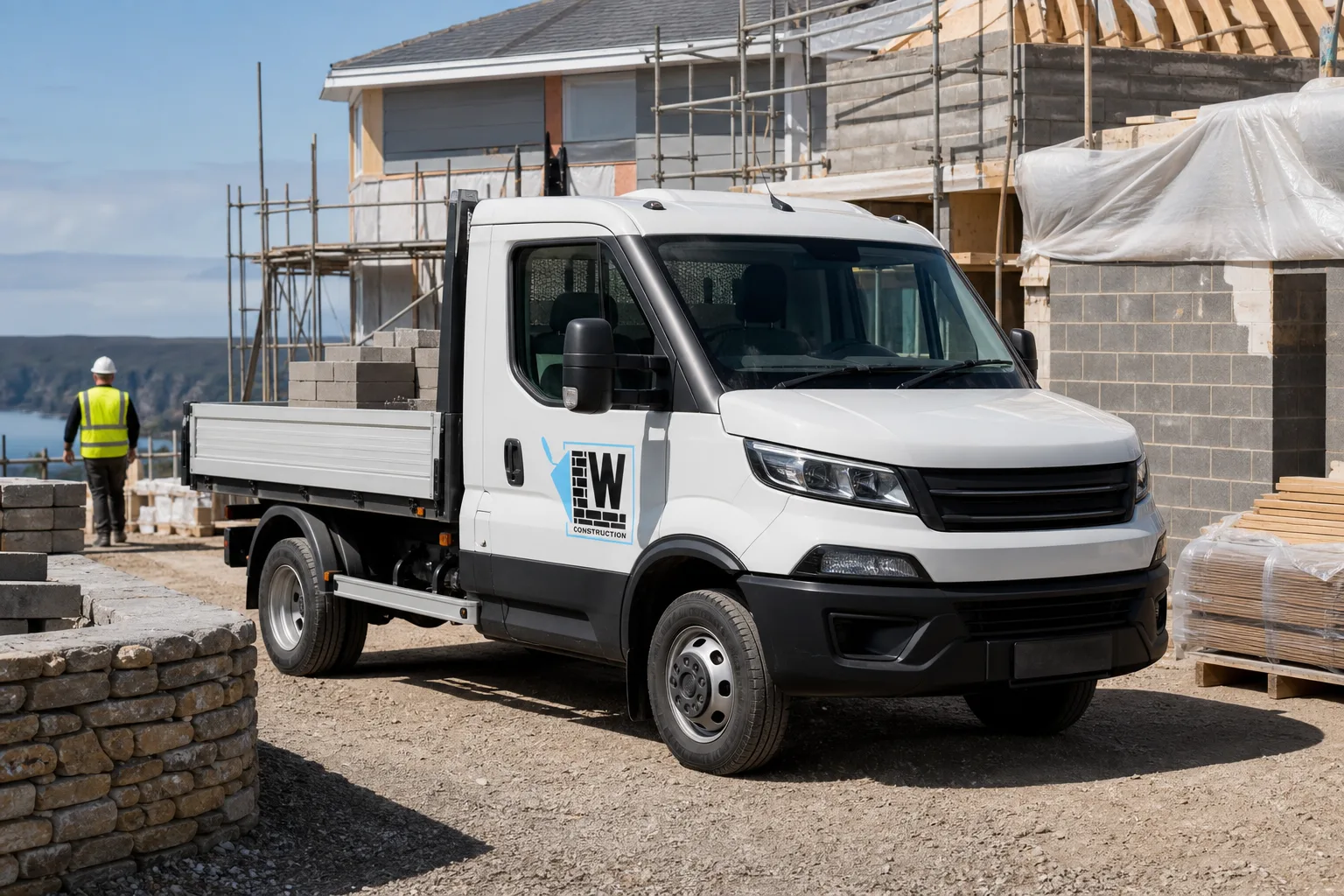
More about Luke →"The brickwork that holds your house up isn't where I'd ever sub-contract. It's the part of every build I came up doing, and it's the part I'll personally lay on every job we take. The trowel and the brickwall are even on our logo for a reason."
— Luke Walker, Founder, L W Construction
Areas We Cover for Bricklaying
We do bricklaying and blockwork across west and central Cornwall, working from our base in Heamoor, Penzance. We cover:
- Penzance — our home patch, including Heamoor, Newlyn, and the surrounding villages.
- Truro — structural, garden, and conservation-area walling across the city.
- Newquay — retaining walls and boundary walls on the north coast.
- Helston — the Lizard and Helston-area stone and block work.
- Falmouth — including Penryn, where conservation-area consent often applies.
- St Ives — granite walling and sloping-plot retaining walls.
- Camborne — Camborne, Pool, and Redruth corridor.
- Hayle — estuary-side walls and boundary work.
Wherever the wall is across Cornwall, call Luke on 07749 468160 for a free site visit.
Recent Bricklaying Work in Cornwall
We're currently documenting our recent Cornwall bricklaying projects — featuring professional photography from our latest premium build.
See our Cornwall project portfolio → for completed projects across new builds, extensions, and bricklaying.

What Cornwall Homeowners Say
See all 22 reviews →Frequently Asked Questions
Is Luke Walker a qualified bricklayer?+
Yes. Luke holds both NVQ Level 3 in Bricklaying and Diploma Level 3 in Bricklaying — the two nationally recognised qualifications for structural brickwork. Both are verifiable. According to the City & Guilds 2024 trade survey, fewer than 1 in 6 UK self-employed builders hold Level 3+ qualifications in their core trade.
Do you build retaining walls in Cornwall?+
Yes. Retaining walls are a Cornwall staple — sloping plots, level changes, road frontages all need them. We build retaining walls in concrete block (rendered or stone-faced), reinforced concrete, or Cornish granite. Every retaining wall includes proper drainage (weep holes + drainage layer behind) to prevent hydrostatic pressure failure.
What's the difference between bricklaying and blockwork?+
Bricklaying uses clay or concrete bricks, typically for the outer skin of cavity walls or for facing work. Blockwork uses larger concrete blocks (usually 440×215×100mm) for inner skins, structural walls, and load-bearing applications. Most modern Cornwall houses are cavity construction — brick outer + block inner with insulation between.
Can you do brickwork on a listed or historic Cornwall property?+
Yes, but we work carefully within the consent constraints. Listed property work typically requires lime mortar (never modern cement), matching historic brick or stone, and consent from the local conservation officer for any structural change. We've worked on sympathetic restoration of older Cornwall properties and won't take a job on if we can't do it to consent standards.
How long does a bricklaying job take?+
It depends on the size and complexity. A standard garden wall (10m, 1.2m high) takes 2-4 days. Cavity walls on an extension are sequenced with the rest of the build (1-2 weeks for a typical single-storey extension). A retaining wall with foundations and drainage runs 3-7 days. We give a clear timeline in the quote.
Do I need planning permission or building control for a wall?+
It depends on the wall. A boundary wall up to 2m (or 1m if it faces a highway) usually doesn't need planning consent. Structural walls and larger retaining walls need Building Regulations sign-off, and any work on a listed building or in a conservation area needs conservation-officer consent. We tell you exactly what applies at the site visit and liaise with Cornwall Council Building Control where it's required.
What deposit or payment schedule do you work on?+
For a standalone wall we normally take a deposit to cover materials at the start, then the balance on completion. On larger structural work that's part of a wider build, payments are staged against progress. No large cash sum up front, and you can always see what you're paying for at each point.
Related Services
New Builds
bricklaying is the structural backbone of every new build.
House Extensions
cavity walls, openings, RSJ bearings — all bricklayer work.
Fencing & Garden Walls
garden walls and boundary walls in brick or stone-faced block.
Groundworks
foundations underneath every brick wall we build.
Need a qualified bricklayer in Cornwall?
Free site visit, written quote within 48 hours.
Last updated: Thursday 24th September 2026