
Groundworks · Cornwall · Residential Scope
Groundworks in Cornwall: Foundations, Drainage, Concrete Works
Residential groundworks across Cornwall — strip foundations, trench-fill, oversite slabs, drainage installation, concrete works, and site clearance. Standard residential depths to 1.5m. NVQ-qualified builder running the site personally. £1M public liability cover via Zurich Tradesman Insurance.
Scope note: We handle residential groundworks at standard depths. Specialist deep excavation beyond 2 metres, piling, quarrying, and large commercial earthworks are outside our scope.
What Groundworks Covers
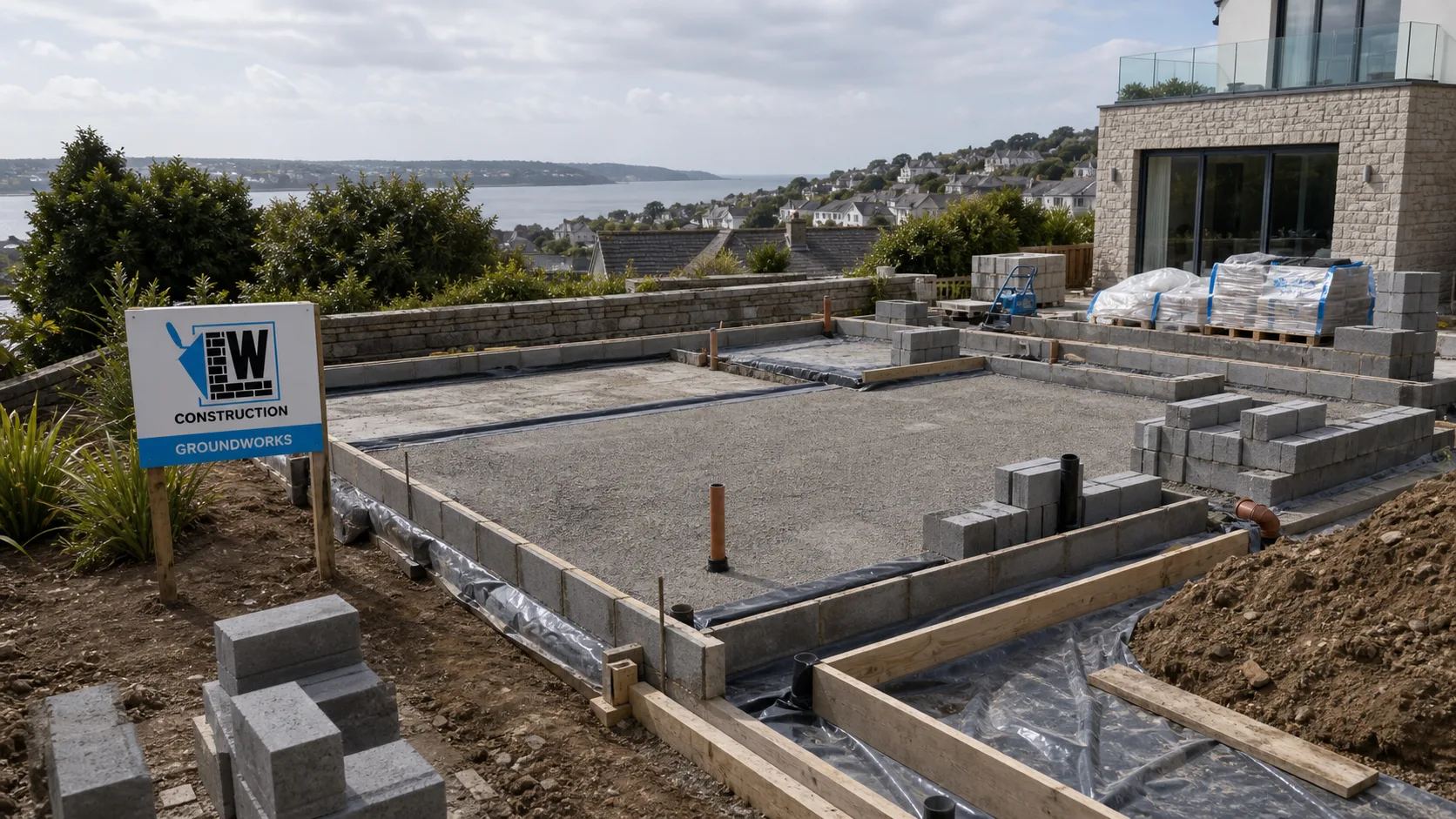
Groundworks is the construction of everything below ground level on a building site — site clearance, excavation, foundations, oversite concrete, drainage installation, soakaways, and the structural concrete works that sit underneath the masonry shell. It's the first stage of any new build or extension, and the stage most likely to derail the budget if it isn't priced and executed right.
In Cornwall, groundworks gets complicated by varied soil conditions — granite, slate, clay, made ground, mine-shaft adjacencies in certain districts — and by the high water table on coastal sites. Foundation depth and design get specified by a structural engineer working from a soil investigation; we install to the spec.
Types of Groundworks We Handle
Strip foundations
— most common residential foundation. Concrete strip 600-900mm wide and 1-1.5m deep, with brickwork or blockwork built up to ground level. Suits most Cornwall residential ground.
Trench-fill foundations
— concrete fills the trench completely up to ground level. Faster than strip + masonry, useful where ground is unstable or soils are friable.
Raft foundations
— full concrete slab across the building footprint. Used on poor ground or where load distribution matters. Engineer-designed.
Pad foundations
— discrete concrete pads under specific load points. Used for porches, garage extensions, posts.
Drainage installation
— foul drainage runs, surface water drainage, soakaways, septic tank connections where applicable. Cornwall Council Building Control sign-off.
Concrete oversite slab
— concrete floor slab inside the foundation walls. Damp-proof membrane, hardcore, insulation, concrete pour to engineer's spec.
Soakaways
— for surface water that can't drain to mains. Crate or rubble soakaways sized to BS 8301.
Site clearance
— vegetation removal, topsoil strip, demolition of small outbuildings (residential, within insurance scope), spoil removal.
Benefits of Properly Done Groundworks
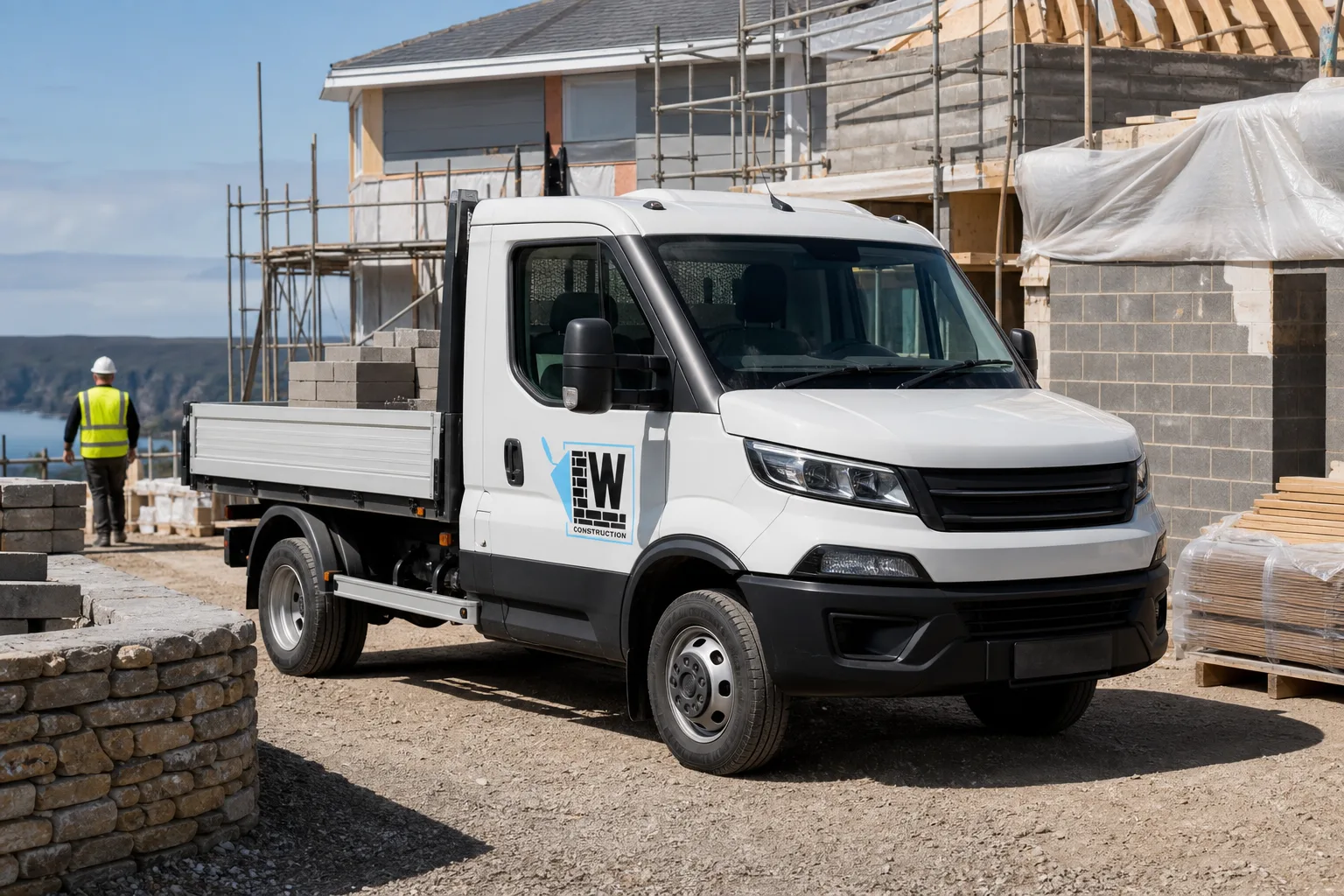
Your build doesn't stall at the first inspection.
Foundation depth, width, and concrete spec all to the engineer's spec, so the Building Control inspector signs off without re-work.
No settlement cracks appearing years later.
A house only settles if its foundations move. Foundations sized correctly to the ground conditions stay put.
No backed-up gullies in heavy Cornwall rain.
Drainage falls correct, pipe diameter sized to the load, soakaways sized to BS 8301.
You're covered while the work's being done.
Our £1 million public liability cover applies to all standard residential groundworks within our policy scope (excludes specialist deep work beyond 2m).
You don't pay for the same foundation twice.
An undersized first pour costs many times more to put right than doing it properly once. We don't undersize to win a price.
Our Groundworks Process
Site visit + soil check.
We look at the plot, talk through what's planned, advise on whether a soil investigation is needed (for new builds, almost always; for small extensions, often not).
Quote in 48 hours.
Itemised — clearance, excavation, foundations, drainage, oversite, concrete, removal of spoil.
Site clearance.
Vegetation, topsoil, existing surfaces removed. Spoil disposed of responsibly.
Setting out.
Foundation lines marked from architect/engineer drawings.
Excavation.
Trenches dug to engineer's spec — typically 1-1.5m for strip foundations on Cornwall residential ground.
Foundation concrete poured.
Mix to engineer's spec (typically C25/30 or higher). Reinforcement where specified.
Drainage runs.
Pipework laid to falls, connections to mains or soakaways. Building Control inspection at each stage.
Oversite slab.
Hardcore, sand blinding, damp-proof membrane, insulation, concrete pour. Floated finish.
Sign-off.
Cornwall Council Building Control signs off the groundworks stages. We hand over to the masonry stage.
What's Included
- Site clearance and topsoil strip
- Setting out from approved drawings
- Excavation to engineer's spec
- Concrete supply and pouring for foundations
- Reinforcement (mesh or steel) where specified
- Drainage runs (foul and surface water)
- Soakaways where required
- Oversite slab (hardcore, DPM, insulation, concrete)
- Spoil removal and responsible disposal
- Building Control liaison and inspection coordination
What's separately: soil investigation, structural engineer's calculations, planning application fees.
Scope note: Specialist deep excavation beyond 2m, piling, dewatering, sheet-pile works, and large commercial earthworks fall outside our standard residential scope. We'll recommend a specialist groundworks contractor if your project needs that.
What Drives the Cost of Groundworks
Groundworks cost depends almost entirely on what's underground and how hard it is to reach — which is exactly why we won't put a number on it before we've seen the plot. Foundations for a small extension are a low-four-figure job; foundations for a new build are a five-figure stage of the wider project. What moves the price:
- Ground conditions — granite, clay, made ground, or a high water table all change the foundation design and the cost.
- Foundation depth and type — strip, trench-fill, raft, or pad, to the engineer's spec. Deeper or reinforced means more concrete and more time.
- Access — whether a digger can get to the trench, or it has to be dug by hand.
- Drainage — the length of foul and surface-water runs, and whether a soakaway is needed.
- Spoil — how much excavated material has to be removed and disposed of.
Groundworks is typically a meaningful slice of a new build's total cost, and Cornwall sits a little above the national average because of ground conditions and material logistics. We give a fixed-price quote after a site visit.
Why Choose L W Construction for Groundworks
One builder from foundation to masonry.
NVQ Level 3 + Diploma Level 3 in Bricklaying — once the concrete cures it's bricklayer territory, so the foundation-to-masonry transition is owned end-to-end.
Fewer surprises in Cornwall ground.
Over 20 years' experience with granite, slate, clay, coastal water tables, and mine-affected districts.
You're protected on every job.
£1 million public liability via Zurich Tradesman Insurance.
You can check us before you commit.
5.0 stars from 22 Google reviews.
No overselling what we're insured for.
We don't claim specialist deep work or piling. If a job needs it, we tell you straight and recommend a specialist.

About the Builder
Luke Walker. NVQ + Diploma Level 3 Bricklayer. Over 20 years' experience in construction.
More about Luke →"Groundworks is the bit nobody sees and where every shortcut shows up later. We don't shortcut the bit that holds your house up — and we don't claim to do specialist deep work we're not insured for."
— Luke Walker, Founder, L W Construction
Areas We Cover for Groundworks
We do residential groundworks across west and central Cornwall, working from our base in Heamoor, Penzance. We cover:
- Penzance — our home patch, including Heamoor, Newlyn, and the surrounding villages.
- Truro — foundations and drainage for new builds and extensions across the city.
- Newquay — coastal-plot foundations on the north coast.
- Helston — the Lizard and Helston area.
- Falmouth — including Penryn.
- St Ives — sloping-plot foundations and drainage.
- Camborne — Camborne, Pool, and Redruth corridor, including mine-affected districts.
- Hayle — estuary-side plots and high-water-table ground.
Wherever the plot is across Cornwall, call Luke on 07749 468160 for a free site visit.
Recent Groundworks in Cornwall
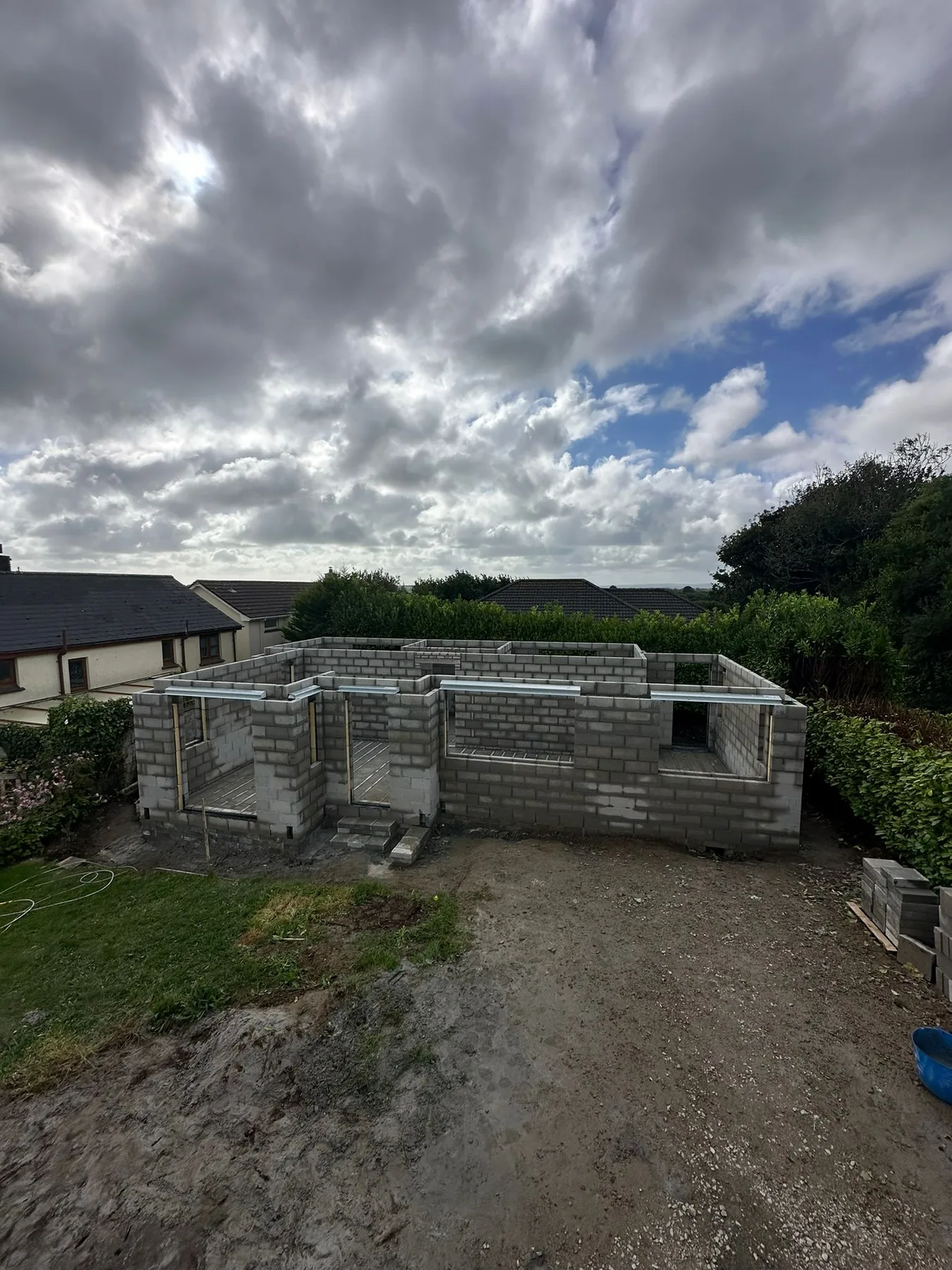
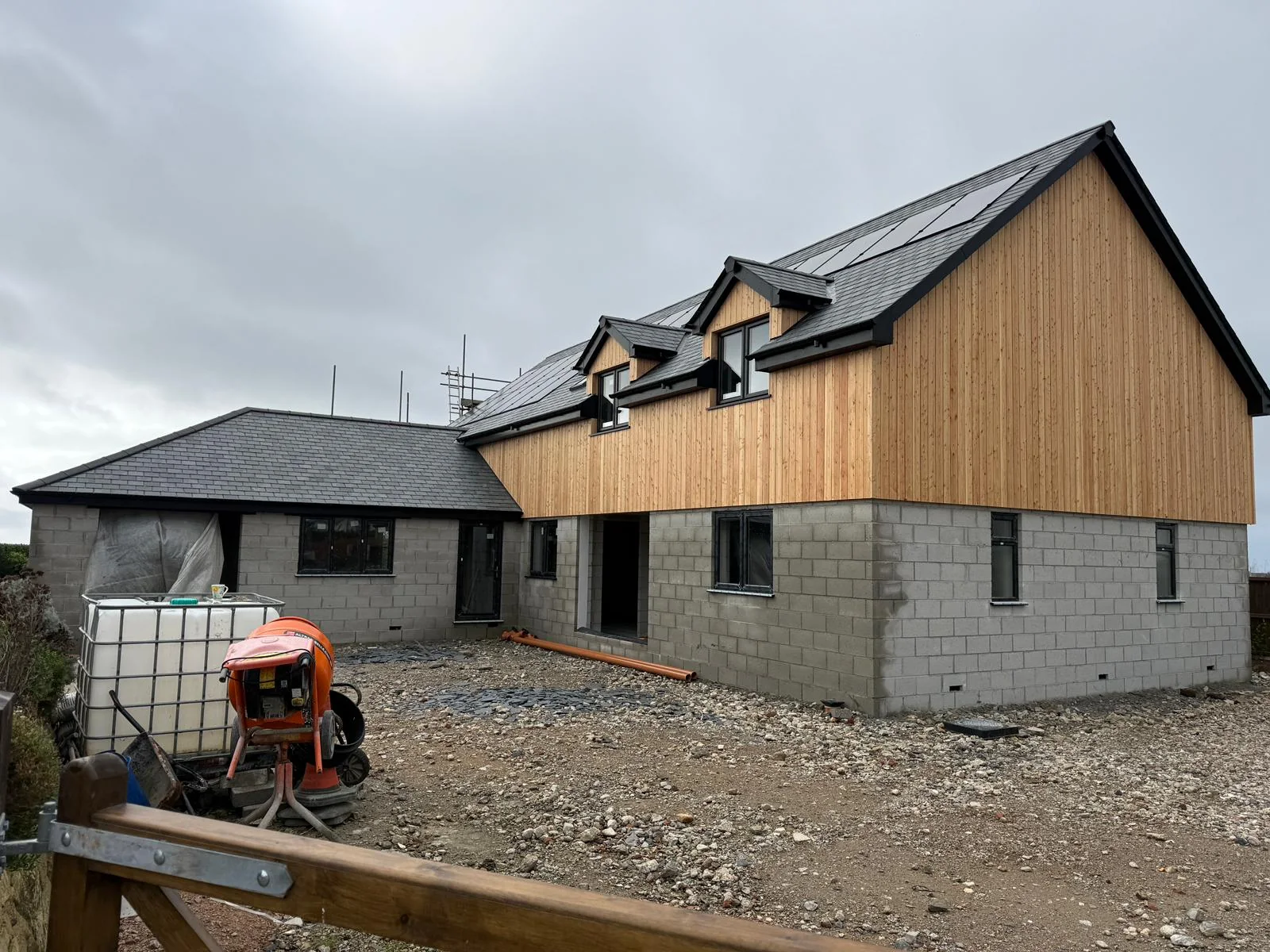
We're adding more recent groundworks projects to our portfolio as they complete — foundations, slabs, drainage, and early-stage builds from across Cornwall.
See our Cornwall project portfolio → for completed work across groundworks, new builds, and extensions.
What Cornwall Homeowners Say
Frequently Asked Questions
What's your maximum excavation depth?+
Standard residential groundworks to a maximum of 1.5-2 metres. Specialist deep excavation beyond 2 metres is outside our standard insurance scope and we don't quote for it. If your project needs deeper foundations, piling, or specialist earthworks, we'll recommend a specialist groundworks contractor at the site visit.
Do you do foundations for extensions and new builds?+
Yes. Strip foundations, trench-fill, raft, and pad foundations all within standard residential depths. Foundation design comes from your structural engineer working from a soil investigation. We install to the spec.
Do you install drainage?+
Yes. Foul drainage runs, surface water drainage, soakaways, and connections to mains drainage or septic tank systems. All laid to correct falls, sized to load, and signed off by Cornwall Council Building Control.
What about ground conditions and soil investigation?+
For new builds, a soil investigation is almost always needed before foundation design — it determines whether strip foundations work or whether you need raft, pad, or piled foundations. For small extensions, often the engineer will work from visual inspection of the existing house's foundations. We advise at the site visit.
Can you remove the spoil from site?+
Yes. All excavated material is removed and disposed of responsibly unless you've specified topsoil retention for landscaping. Skip hire is included in the quote where appropriate.
How much do groundworks cost?+
It depends almost entirely on what's underground and how hard it is to reach, so we won't put a number on it before we've seen the plot. Foundations for a small extension are a low-four-figure job; foundations for a new build are a five-figure stage of the wider project. The price moves with ground conditions, foundation depth and type, access for a digger, drainage runs, and how much spoil has to be removed. We give a clear, itemised fixed-price quote after a site visit.
What deposit or payment schedule do you work on?+
Groundworks is usually the first stage of a wider build, so it sits within the staged-payment structure for the whole project — a materials deposit at the start, then milestone payments against progress. On standalone groundworks we take a deposit at the start and the balance once Building Control has signed off the stages. No large cash sum up front.
Related Services
New Builds
— groundworks as the opening stage of every new build.
House Extensions
— strip foundations under every extension we build.
Bricklaying and Blockwork
— the structural masonry that sits on the foundations.
Driveways and Paving
— drainage and sub-base preparation alongside surface work.
Need Cornwall groundworks?
Free site visit, written quote in 48 hours.
Last updated: Thursday 24th September 2026